
Smart Buildings and PoE Lighting
When the lighting grid becomes the sensor network
Lighting is the largest class of always-on electrical load in most commercial buildings, and it was historically the one part of the fit-out with nothing to do with the network. LED efficiency and IEEE 802.3bt changed that arithmetic. A luminaire that once needed 60 W of mains now needs 15 W to 40 W of DC — within what a single Type 3 or Type 4 port delivers — and once it is on the network it becomes a sensor platform as well as a light.
What makes this deployment hard
- Three hundred fixtures at class 5 reserve 13.5 kW of switch capacity, with the rack space and cooling that implies
- One cable per fixture means far denser containment than a lighting circuit, carrying high-power PoE
- Statutory emergency lighting generally cannot simply be another PoE port
- Lighting becomes the responsibility of the IT department, which is an organisational change as much as a technical one
- Local electrical codes on low-voltage installation vary and must be confirmed, not assumed
Quick reference
| Downlight | 8-15 W, class 3-4 |
| Linear pendant | 20-35 W, class 4-5 |
| Troffer 600x600 | 25-40 W, class 5-6 |
| High bay | 50-70 W, class 7-8 |
| Sensor node only | 2-5 W, class 1-2 |
Design guidance
Why 802.3bt was the enabler
Under 802.3af only the smallest fixtures were viable, and 802.3at left larger troffers and high bays out of reach. Type 3 at 51 W and Type 4 at 71.3 W at the device brought most commercial luminaires inside the envelope, while 4-pair delivery cut the conduction losses that would have made long runs wasteful. Autoclass matters just as much at this scale: it lets the system reclaim the difference between a fixture class allocation and its dimmed consumption, across hundreds of ports.
Where the savings actually come from
The energy saving from LED is available with or without PoE. The genuine PoE-specific gains are elsewhere: installation labour drops where low-voltage cabling can be run without conduit; control granularity improves so daylight harvesting and occupancy dimming operate per luminaire rather than per zone; re-zoning a floor after a move becomes a configuration change instead of a rewire; and the lighting grid doubles as a dense sensor mesh for occupancy analytics and HVAC optimisation.
Plan the thermal and containment design early
Dense bundles of cable each carrying Type 3 or Type 4 power are exactly the situation where temperature derating applies. Heat has to conduct outward through surrounding cables before it reaches moving air, so the centre of a large bundle runs hottest. Keep bundles to two dozen cables or fewer, prefer open basket tray to solid trunking, and specify Cat6a with 23 AWG conductors — it has lower resistance per metre and dissipates heat better than 24 AWG Cat5e.
Settle emergency lighting at design stage
Statutory emergency and escape lighting is subject to its own regulations and in most jurisdictions cannot simply be another PoE port. Emergency fixtures are typically retained on a conventional protected circuit with self-contained batteries, or the PoE switching is placed on a suitably rated and maintained standby supply. Establish the compliance route with the authority having jurisdiction before the design is fixed, not at handover.
Equipment for this application
All products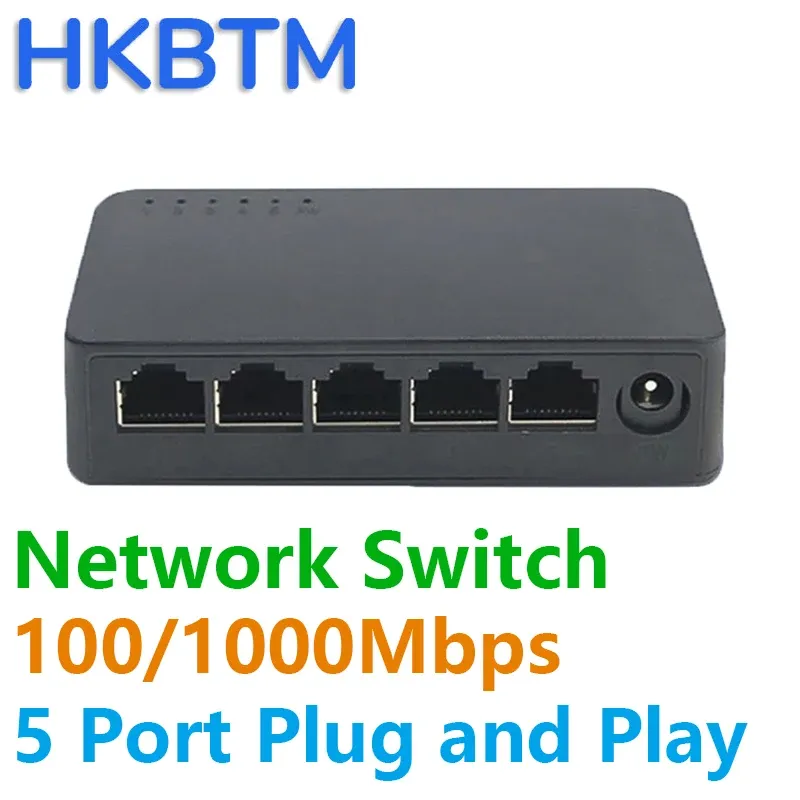
Network Switch Mini 5Ports Switch Ethernet 1000Mbps/100Mbps Gigabit High Performance Smart Switcher RJ45 Hub Internet Injector
Network Switch Mini 5Ports Switch Ethernet 1000Mbps/100Mbps Gigabit High Performance Smart Switcher RJ45 Hub Internet Injector
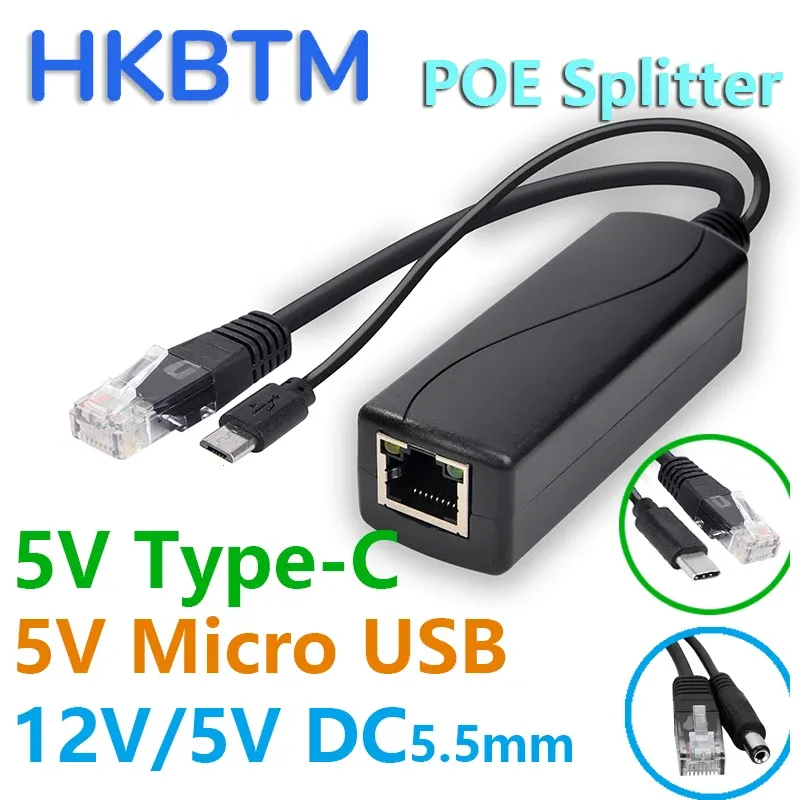
POE Splitter 48V To 5V 12V Micro USB tpye-C BarrelJack Power Supply for Huawei for Hikvision for Bobcat for Raspberry Pi
POE Splitter 48V To 5V 12V Micro USB tpye-C BarrelJack Power Supply for Huawei for Hikvision for Bobcat for Raspberry Pi
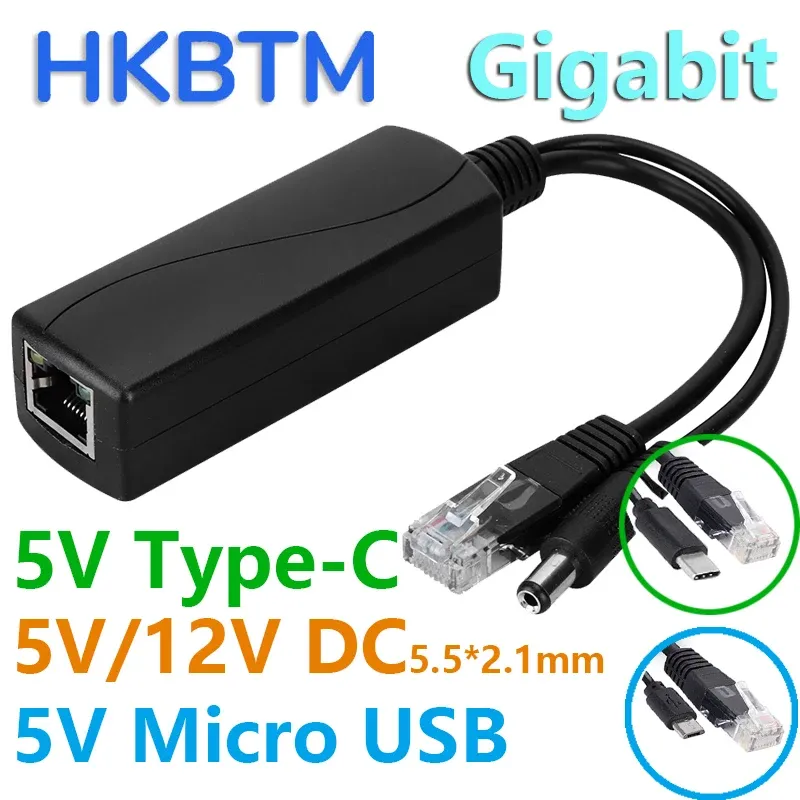
Gigabit PoE Splitter Micro USB/Type-C/DC Power over Ethernet for IP Camera/Raspberry PI/sensecap/Bobcat
Gigabit PoE Splitter Micro USB/Type-C/DC Power over Ethernet for IP Camera/Raspberry PI/sensecap/Bobcat
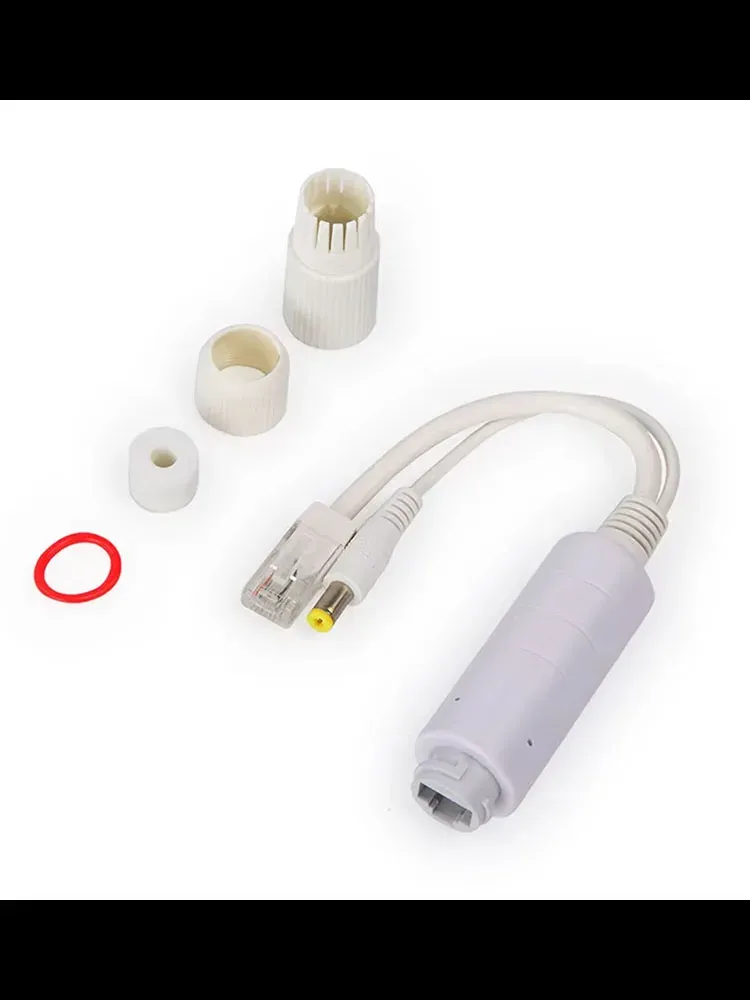
Waterproof POE Splitter DC 12V IEEE 802.3af 100Mbps Power over Ethernet for IP Cameras NVR System Wifi Connection AP
Waterproof POE Splitter DC 12V IEEE 802.3af 100Mbps Power over Ethernet for IP Cameras NVR System Wifi Connection AP

28cm USB Cable with Switch ON/OFF Cable Extension Toggle for USB Lamp USB Fan Power Supply Line Durable HOT SALE Adapter
28cm USB Cable with Switch ON/OFF Cable Extension Toggle for USB Lamp USB Fan Power Supply Line Durable HOT SALE Adapter
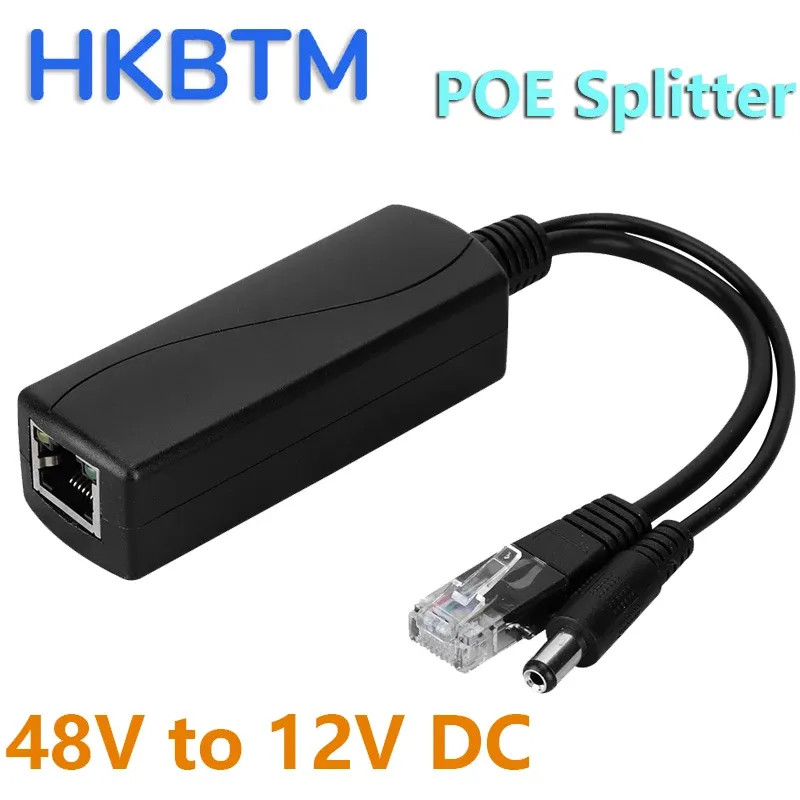
48V To 12V POE Connectors Adapter Cable Splitter Injector Power Supply for Huawei for Hikvision 2022 New
48V To 12V POE Connectors Adapter Cable Splitter Injector Power Supply for Huawei for Hikvision 2022 New
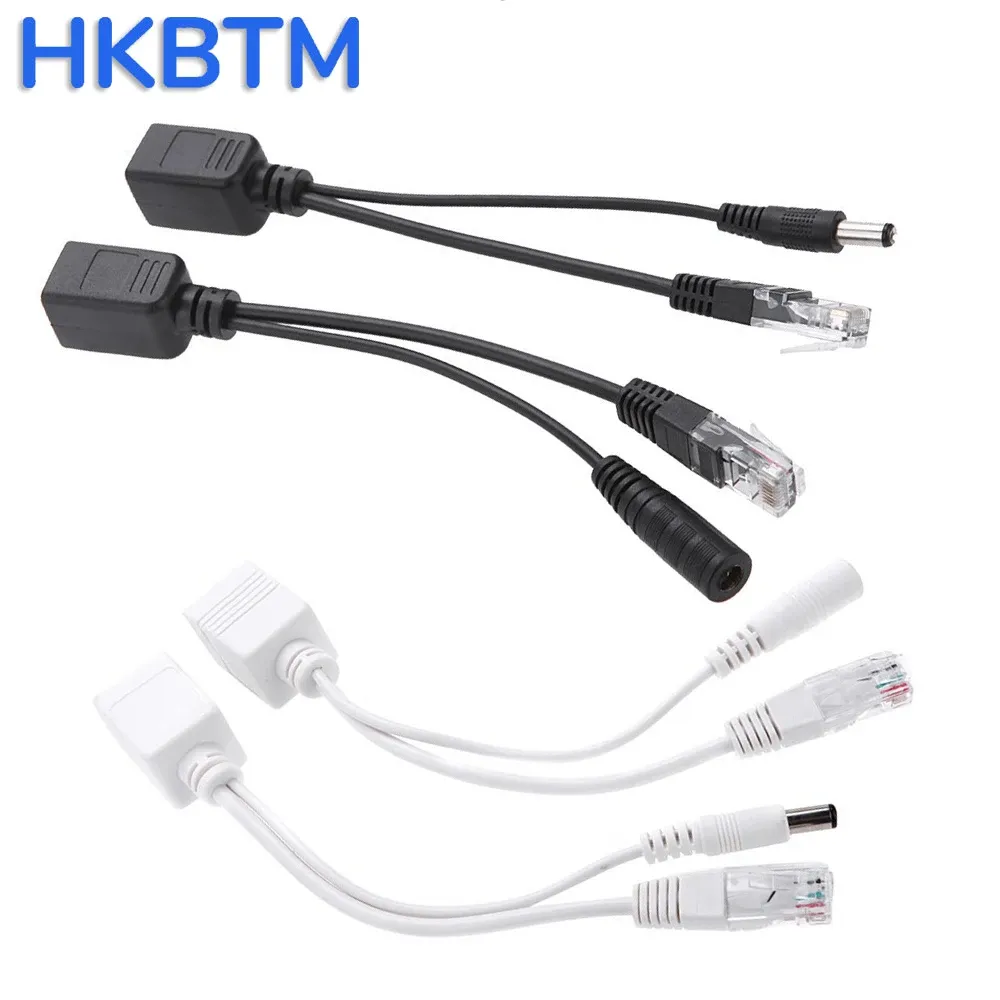
POE Cable Passive Power Over Ethernet Adapter Cable POE Splitter Injector Power Supply Module 12v For IP Camera
POE Cable Passive Power Over Ethernet Adapter Cable POE Splitter Injector Power Supply Module 12v For IP Camera
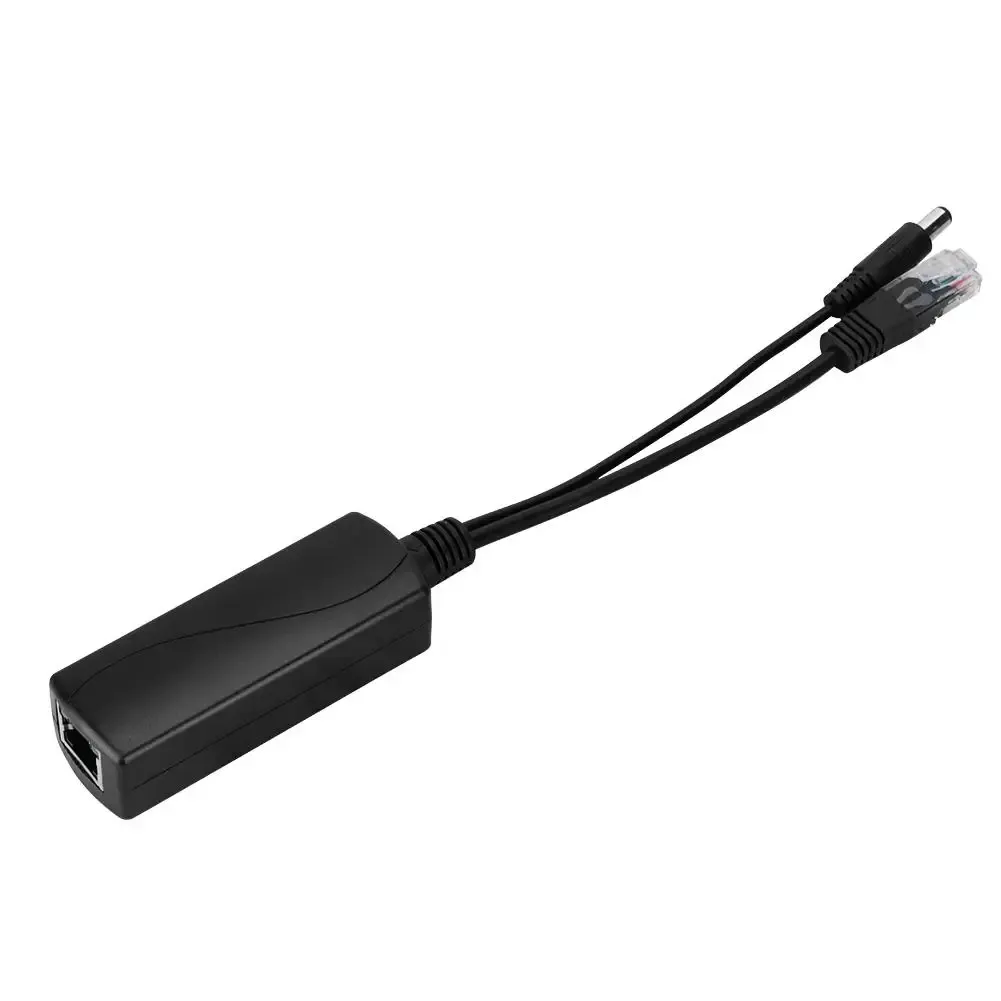
12V POE Connectors Adapter Cable Splitter Injector Power Supply for Huawei for Hikvision 2022 New
12V POE Connectors Adapter Cable Splitter Injector Power Supply for Huawei for Hikvision 2022 New
The engineering behind it
PoE Lighting and Smart Buildings
How 802.3bt made networked lighting practical, what a PoE lighting topology looks like, where the savings really come from, and the design constraints that catch people out.
Read articleIEEE 802.3bt Explained: Type 3, Type 4 and 90W PoE
A practical guide to IEEE 802.3bt: what Type 3 and Type 4 deliver, how 4-pair power works, single- and dual-signature PDs, Autoclass, and backward compatibility.
Read articlePoE Cable Heating, Bundling and Temperature Derating
Why high-power PoE bundles heat up, how temperature rise eats into your distance budget, and how cable category, bundle size and conductor gauge control the outcome.
Read articlePoE Power Classes 0 to 8 Explained
What each PoE class means at the PSE and at the PD, how physical-layer classification works, and why LLDP negotiation and Autoclass change your power budget.
Read articleSpecify it with us
Tell us the load, the distance and the environment, and we will come back with a part list. We also build to specification where nothing off-the-shelf fits.